
Compare the Three Comanche County Property Values
A Comanche County property value is never one interchangeable number. The county appraiser estimates market value for each parcel. Kansas classification rules then convert that amount into assessed value, and a recorded deed or other instrument may state the consideration from a transfer. Each figure answers a different question. The CIC cards add another layer: they split land value from improvements and preserve several valuation years side by side, so a single parcel can show multiple legitimate numbers at once. Always read the label and the valuation year before comparing any two figures.
| Value | What It Is | Where |
|---|---|---|
| Appraised market value | The county appraiser's estimate before the class ratio | CIC parcel card |
| Assessed value | Appraised value multiplied by the Kansas assessment ratio for the property class | Appraiser and tax record |
| Sale consideration | An amount that may be stated in a recorded transfer; it is not shown as a sale-price field on sampled cards | Recorded deed or transfer instrument |
| Land and improvement values | The component amounts that make up the card's total | CIC value history |
Kansas sets the assessment ratio by property class. Residential real property carries an 11.5% ratio, vacant lots use 12%, commercial real property 25%, and agricultural-use land or other classes may reach 30%. Confirm the class first. The ratio only applies afterward, and it never turns an assessed figure into a probable selling price.
Apply Kansas Ratios to Comanche County Assessed Value
Kansas separates appraisal from assessment through a classification ratio. The Kansas Department of Revenue explains that appraised value reflects a market estimate for most real property. Assessed value is what remains after the statutory rate is applied. Agricultural land follows use-value rules instead of a simple residential-market approach. A worked example makes the split clear. A sampled Coldwater residential card shows a 2026 total appraised value of 12,950. Applying the 11.5% residential ratio yields about 1,489 before rounding and before any levy. That math illustrates the distinction only. It is not a claim about a tax bill. It is not a claim about a current sale price for the parcel.
Keep the labels straight. Appraised value times the applicable class ratio produces assessed value. A mill levy is a separate tax calculation.
Land and Buildings Split a Comanche County Total
CIC cards show land, improvement, and total values by year. That split can reveal where a change sits. It may sit in the site component, the structures, or both. The card may also list acreage, dimensions, neighborhood, taxing unit, year built, style, quality, condition, and other characteristics. These feed mass appraisal. Do not mistake the component figures for separate offers or prices. They are appraisal inputs and results on a county record. Was a building removed, remodeled, or classified incorrectly? Compare the listed characteristics with the actual property. Then contact the Comanche County Appraiser about the card. The sample CIC value-detail card displays the yearly land, improvement, and total fields. They appear in their full record context.
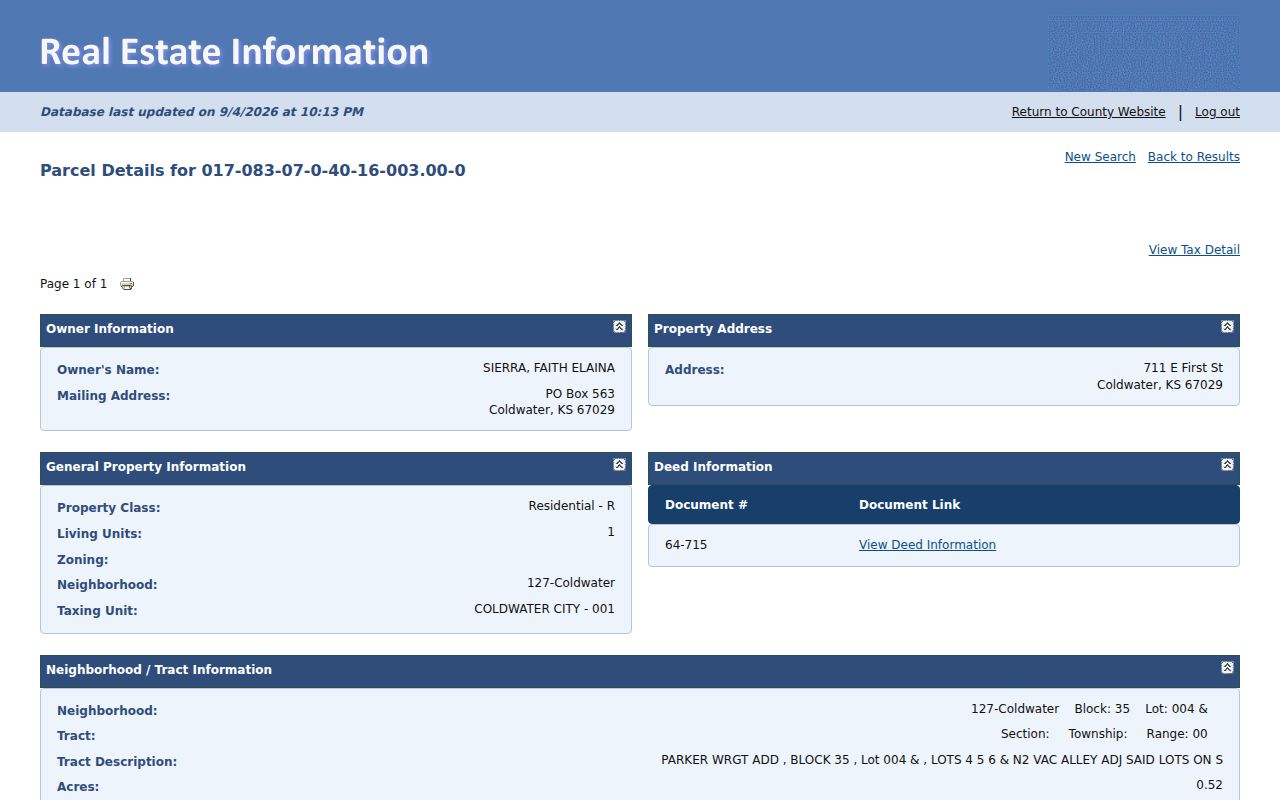
The card layout shows why the valuation year and field label must travel with every number copied from the public record. Note: A complete value check records the year, land amount, improvement amount, total, class, ratio, and card update date together.
Look Up a Comanche County Property Value by Address
The CIC public portal is the fastest route to a value of record. It also lets you confirm the owner of record, situs, parcel number, legal description, and taxing unit before interpreting any of the numbers.
- Enter through the CIC Appraiser Web Portal and continue as a public user.
- Search by address, advertised owner name, or exact PID, then confirm the situs and legal description.
- Read each year's land, improvement, and total values, plus the property class and update timestamp.
- Use the deed document reference to ask the Register of Deeds whether the recorded instrument states consideration.
- Assessed value
- The appraised amount after the applicable Kansas property-class ratio.
- Market or appraised value
- The county's mass-appraisal estimate before that ratio.
- Assessment ratio
- The statutory percentage assigned to a property class.
- Sale consideration
- An amount stated in a transfer instrument, which may differ from market value and may not represent an open-market sale.
Comanche County Value History Is Not Sale History
Parcel cards show annual value history but no explicit sale-price or sale-date field. A rising or falling appraised total tells you nothing about what the property actually changed hands for. The deed document number points to an instrument, but the card does not reveal its terms. When consideration matters, ask the Register of Deeds for the cited instrument. A deed may state consideration. Yet transfers among relatives, estates, trusts, public entities, or through court process may not reflect an ordinary market deal. Read the instrument and its circumstances together before drawing a conclusion about value.
Different Comanche County Parcels Move Differently
The 2026 county market study says residential values kept climbing slightly through 2025. General trends ran about 2% to 8%. It found vacant land stable, with no clear overall trend because data were limited. Commercial and industrial results were mixed. Those are broad study findings, not a promise about one card. The samples prove the point. A Coldwater residence moved from 11,770 in 2023 to 12,770 in 2024. It then hit 13,030 in 2025, and 12,950 in 2026. A Protection vacant lot held at 2,570 from 2023 through 2026. It had sat at 1,770 in 2022. A separate city-owned Protection lot stayed flat at 1,550 from 2022 through 2026. Property class and parcel facts matter far more than a county-wide slogan.
Comanche County Value Dates Need Context
Kansas values real property as of January 1. The state calendar sets March 1 for valuation notices and gives a 30-day equalization-appeal window. Certification and later tax dates belong to the tax process. For the meaning of the value itself, compare the valuation year, card update stamp, and physical facts as of the assessment date.
The public CIC entry showed a database update in September 2026, while inspected cards carried different update dates from June through September. That staggered evidence supports checking each record's own timestamp. It does not support a blanket claim that every card refreshes daily or that a new sale instantly changes the owner or value.
For tax bills, exemptions, and protest routes, use the Comanche County property tax records guide. This page stops at how valuation figures are made and read.
Agricultural Use Changes Comanche County Valuation
Agricultural land sits outside the residential ratio example entirely. Kansas values qualifying farmland by its use, not by market sales. So the county appraiser publishes agricultural-use materials and value tables for that purpose. Start with the property record card. Confirm the classification, acreage, and use details there. Then turn to whatever state and local sources apply to that class of land.
A vacant city lot deserves the same caution. The sampled vacant lot in Protection carried a 12% classification. Residential property in Comanche County, by contrast, sits at 11.5%. Acreage by itself explains neither the market-land factors. It also fails to explain the final appraised amount on the tax roll. When the class or land-use treatment looks wrong, ask the appraiser directly.
What Comanche County Property Value Cannot Prove
The county figure is a mass appraisal built for public assessment. It cannot promise a sale price, establish title, or locate a legal boundary. A buyer, seller, or estate may need a licensed appraisal matched to the effective date and intended use. Deed records and survey work answer the separate legal questions a county value never will.
Value versus price. A Comanche County assessed value supports taxation. It is not what the property will sell for and is not an independent appraisal.